

the erratics
Ice, time, and the miseducation of wilderness.

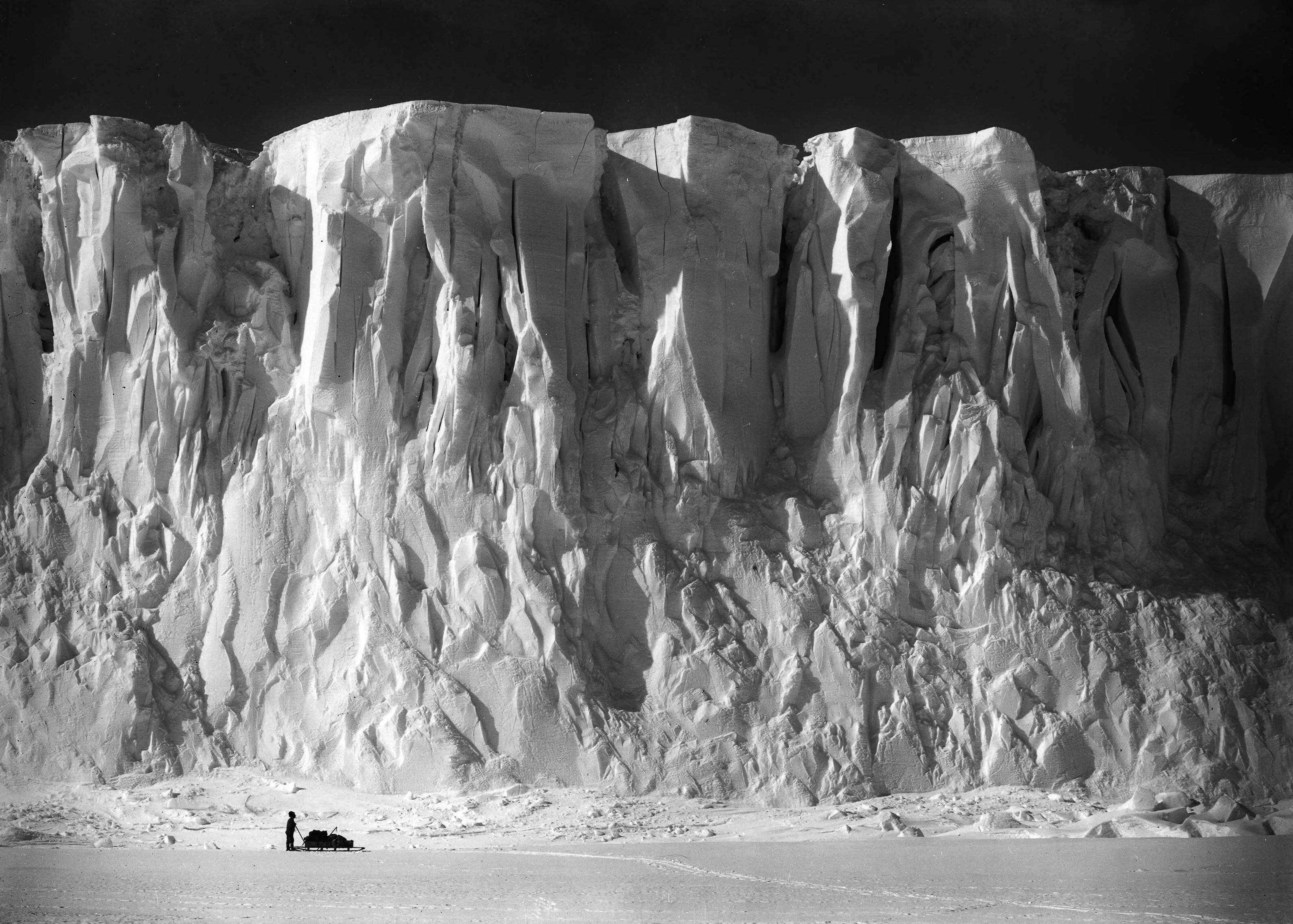
In the study of geology there are large boulders or rock fragments transported and deposited by glaciers, often miles from their original source, leaving them resting on bedrock of a different composition. Ranging from pebble-sized to house-sized, these wandering rocks are called ‘erratics.’ This story is something like that.
Once a year I head north on my own to sequester in a cottage by a lake, in the coldest months, a frozen retreat. It is a short 24 hours but I know how to stretch time and make it seem like more. I slow down, and I start a fire and read by it. A couple of years ago I sat by the fire reading and a surreal moment happened, someone I knew showed up in my book. I was reading Robert Macfarlane and he began to reference things that sounded so familiar to me, as if I was, in a loose way, entering into the rhythm of the words on the page, I became connected to the story. Macfarlane was talking about teaching and living in China in the early 2000s, something I too did. His descriptions and feelings I knew. Then he mentioned a friend who invites him on a hiking trip, and he names the friend, and the friend is a friend of mine as well, no mistaking, a man named Jon Miceler.
Jon is one of those people, out there, doing things, starting projects, finishing projects, writing books, producing movies, saving wildlife, all quietly while the rest of us sleep. Macfarlane writes about Jon inviting him along on a pilgrimage to a mountain in Western China, Minya Konka, an auspicious and pyramidal mountain peak on the eastern side of the Tibetan plateau, the highest mountain peak in Sichuan province. On the pilgrimage, Jon tells Macfarlane a story about the mountain, a warning to the impulse some have of summiting such peaks. There are many ways humans have worshiped mountains, one of which is an obsession to walk on the top, to climb to the great altitudes, and involves the word conquer.
Jon Miceler grew up near the shores of Lake Ontario in Rochester, New York. His mother was a Buddhist who studied Zen Buddhism under Philip Kapleau in the Rochester Zen Center, one of the oldest Zen centers in the United States. You can feel this somehow when you interact with Jon, some calming aspect that happens in what I know of Zen and Buddhism. After high school Jon moved to Colorado and forever folded into the mountains. From Colorado he went to China and the mountains continued to call. There are well worn connections between hunting, conservation, sport, and wilderness. You find the rare species on the fringes, in the hard to get to places, the places last developed in some urban planning scheme. Mountains and deserts, oceans and space. Jon enjoyed sport and science. After moving to China and exploring eastern Tibet he once wrote a letter to the famed adventurer and conservationist George Schaller describing animals he had been seeing on his adventures, “and George wrote back, that is the kind of guy he is.” The letter started a long friendship as well as helped usher in a career. Jon eventually became the Managing director of the Eastern Himalayan region for the World Wildlife Fund from 2008-2014, then the Senior Director of Asia programs for the World Wildlife Fund from 2014-2018. He also had his own expedition company helping climbers and scientists handle logistics for remote travel in western Sichuan Province, Tibet, and Yunnan.
I called Jon and asked him if he would tell me the story he told Macfarlane so I could write it down. It is not my story, neither is it Jon’s. It belongs to others as you will see, but there is something universal in it that touches and enlightens, something opaque and ghostly, but certainly real and true, qualitative as opposed to quantitative.
