

the specific frequency of sand
On sandstorms, spies, and embassies

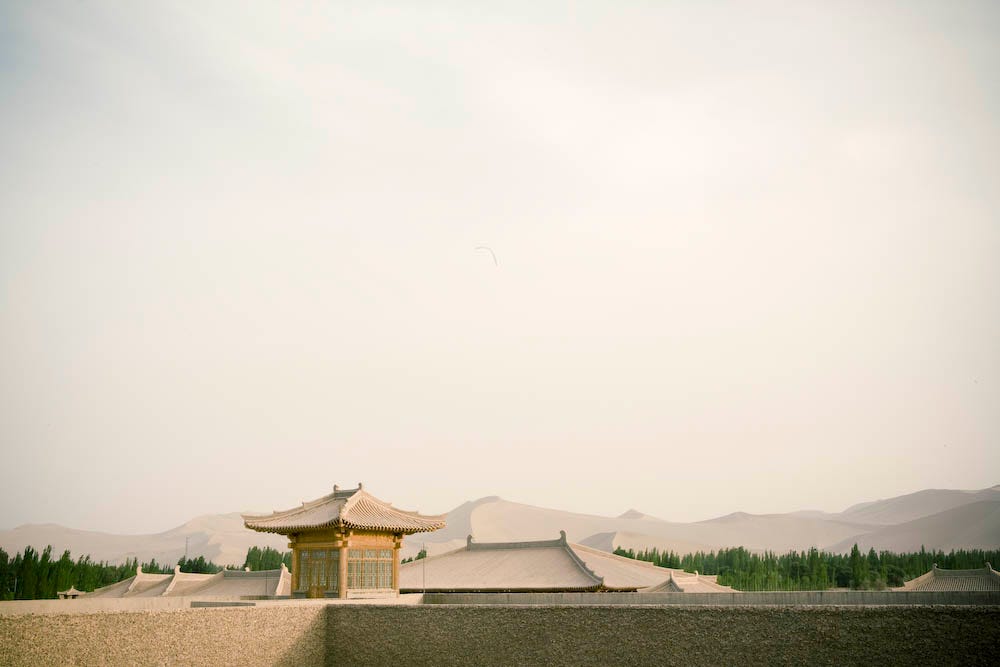
Some of the sand piles reached upwards of 300 feet high. They say the name of this desert means “you can get in, but you can’t get out” like some Central Asian Hotel California. The Taklamakan, the world’s second largest shifting sands desert, the backdoor of the Tibetan plateau. There is a part of this desert, a basin, that is the second lowest point on Earth, a stark contrast to the highest peaks close by.
T.E. Lawrence preached the gospel of the desert because “it’s clean,” for me it is something else, something deeper, the sublime, the fear and the size, it feels like some sort of ancient god, omnipresent and wrathful.
In the Taklamakan there are cities that are eaten by the moving sands only to be spat out years later, preserved and digested. There are amusement parks on the fringes of this landscape, where you can rent a camel to walk to the peak of a dune and slide down the backside of the sand mountain on a sheet of cotton wood planks, blasting down like a snow hill. On the really dry days there is a vibration that hums as you slide down, and the entire mound seems to hum. The Singing Sands (Mingsha Shan), located near Dunhuang, are massive, whistling sand dunes known for producing musical booming or roaring sounds when wind blows. The phenomenon occurs when dry, silica-rich sand grains shear against each other, creating vibrations that act as a natural acoustic resonance.
Typically the vibration is at a low frequency, deep, commonly in the range of 60 to 150 Hz. Specific studies have recorded other dunes around the globe creating notes between 90-150 Hz (F-sharp to D) like in Oman, and a consistent G-sharp (~105 Hz) in Morocco.
The dunes sing.
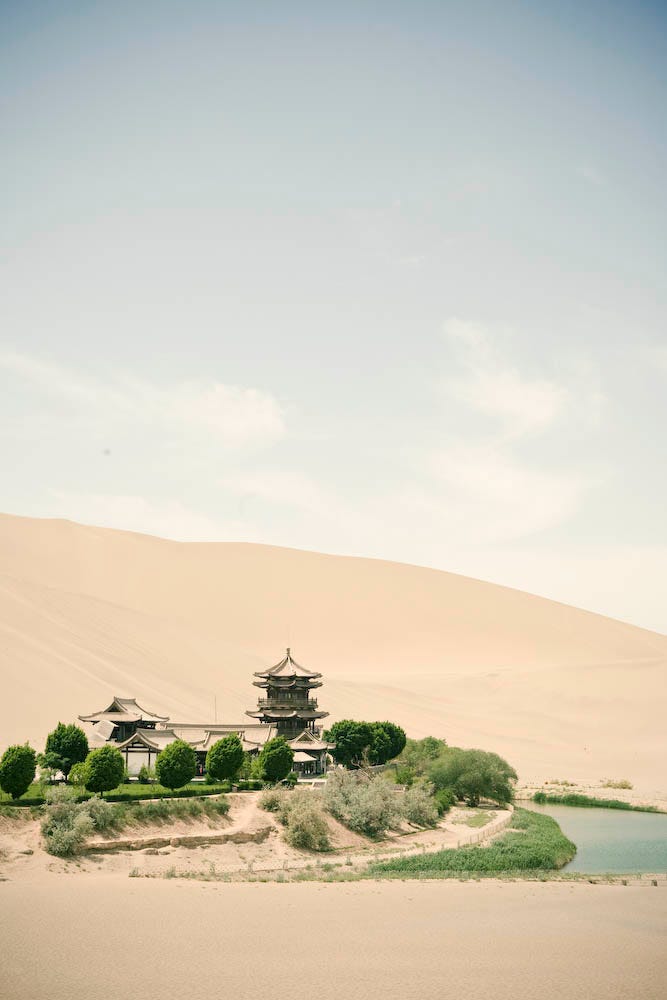
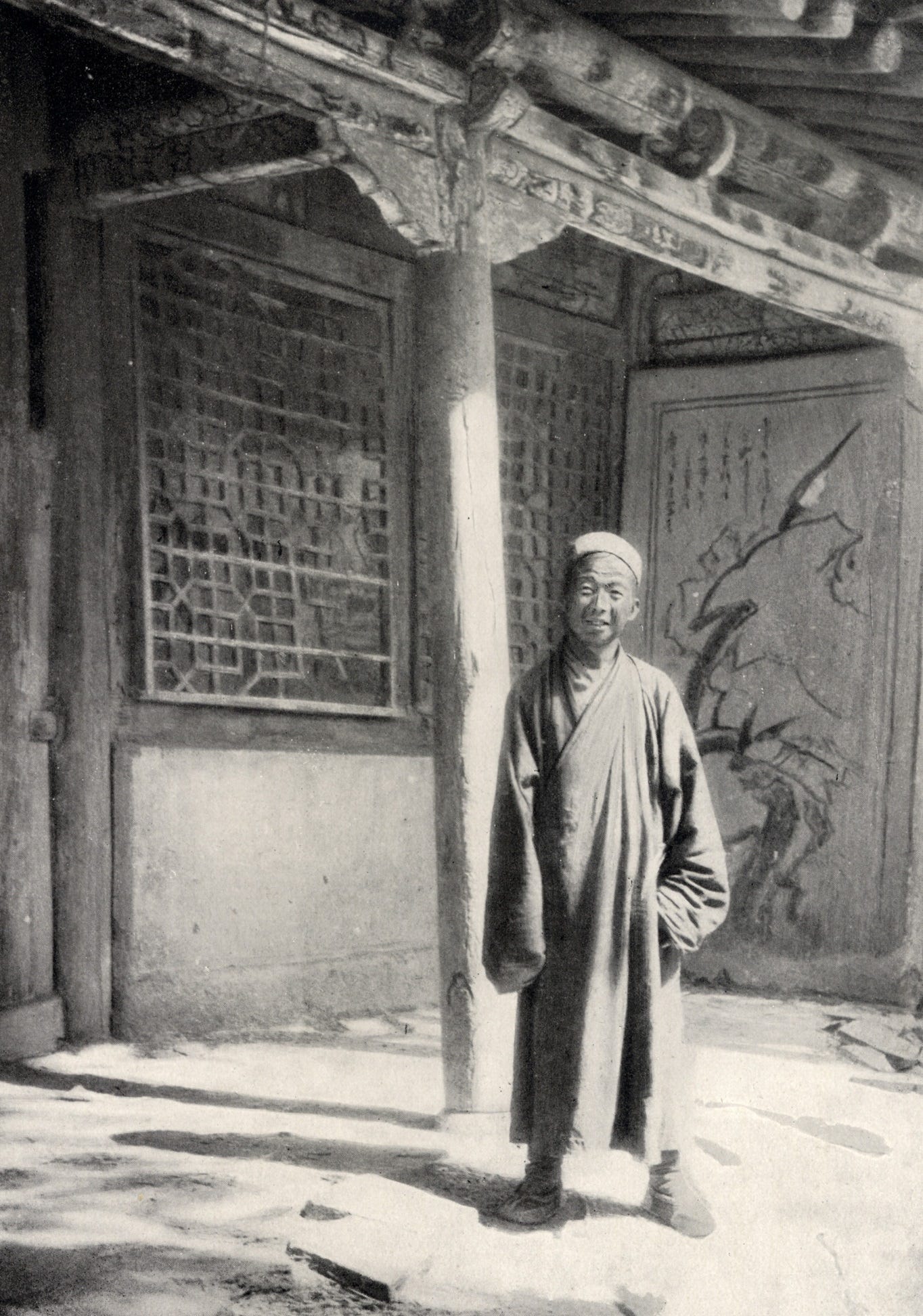
There is an oasis 10 km from the village of Dunhuang where all the roads converge. There is a large cliff of sand, and a small river coming out of the desert dunes, and a series of caves filled with iconography, from Greek gods to Hindu images and Buddhist Prayers. Here is the place where things changed, where one was either leaving China, or entering, where roads from India came north through the mountains, where trade routes from Europe converged into Asia, and Gods met for the first time: Buddhist, Christian, Hindi, Muslim, Jewish, Zen. Because it was the end and start of the road, it was a place of prayer. A place where thanks was given to Gods for having survived through the long haul, or hopes for being able to make it. A true frontier town. In the caves one would paint whomever one worshipped, letters would be left for lovers, friends or foes; books would be left, the oldest of books – it is where the Diamond Sutra was stolen, the oldest printed book we have presently in the world. A way station, a last will and testament, a post office, a library. The rooms in the sandstone wall were called the Mogao Caves, or the caves of 1,000 Buddhas, and for hundreds of years it was forgotten in the desert, like a dream, covered with sandstorms, encapsulated. In the late 1800’s a young Abbot from a sorted past, illiterate, and finishing his military work, decided to take on the caves as a moral obligation to watch, protect, and care for, a librarian who couldn’t read for the world’s oldest library; The Good Abbot Wang Yuanlu.
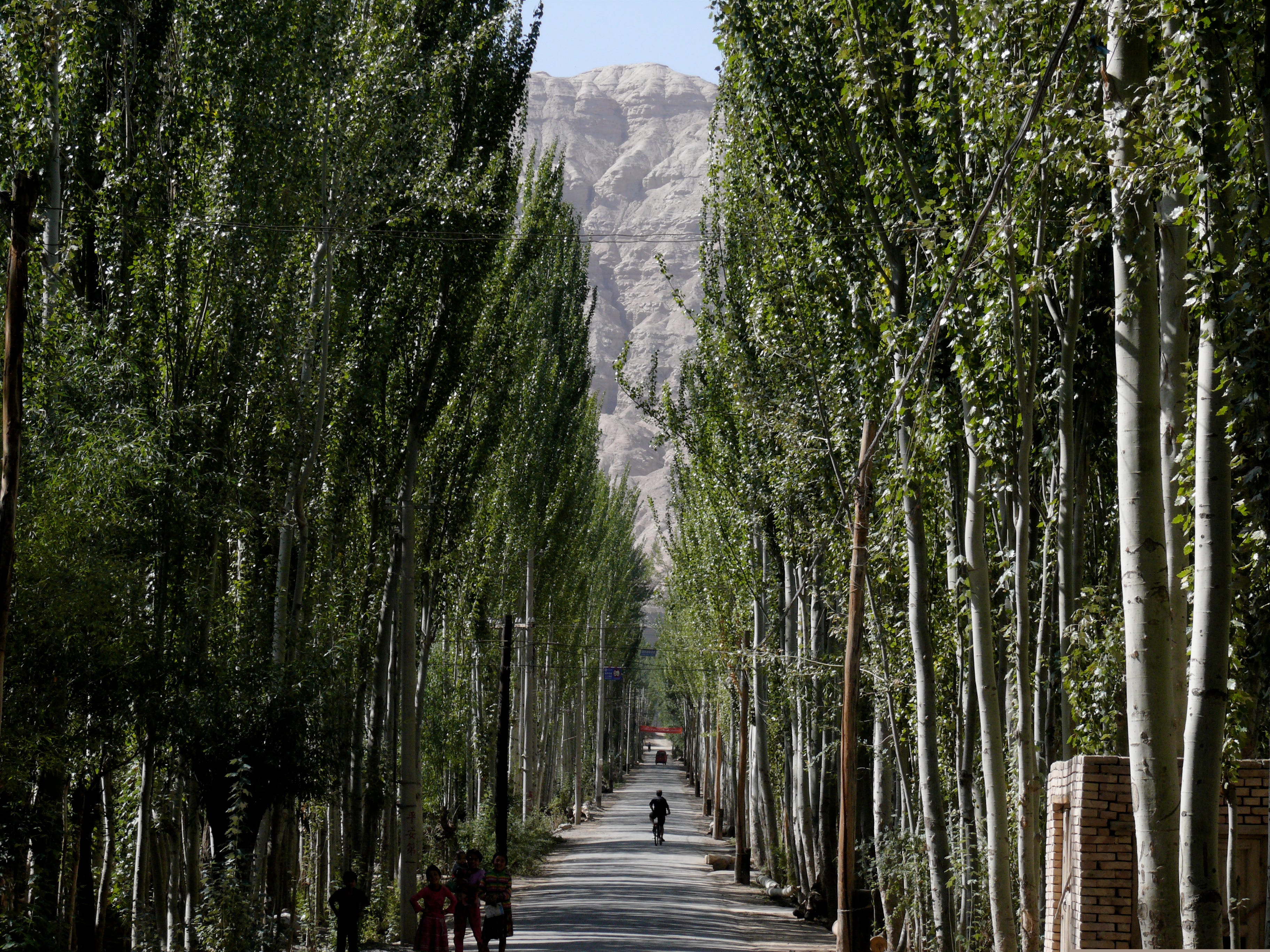
At the other end of the Taklamakan is the Oasis city of Kashgar, the farthest point on earth from the ocean. Kashgar looks up at the Pamir Mountains to the west, the Tian Shan to the north, and the Kunlun Mountains to the south. East is sand, like some city on the shores of a great body of water, but this body is composed of silica and stone as opposed to water. There is a market in Kashgar that has been going for over 2000 years, livestock brought in from Kyrgyz, Tajiks, Uyghur, Mongol, Tibetan, all sold with a handshake and a haggle.
When I first arrived in Kashgar I heard talk of the old British Embassy, a building named Chini-Bagh. This was in a time period when maps were illegal, both paper and online. The idea being if the people didn’t know where they were they were easier to control. Kashgar is in China, but it doesn’t feel like it is, it has more in common with Uzbekistan or Afghanistan, both are short drives away. It is the once capital of a separate kingdom called Kashgaria, or East Turkestan, but firmly in the grasp of Han China now, it is held and controlled and measured. Because of the lack of maps, places lived in mythos and story, and to find things, to research and look took conversation and community as opposed to google searching and digital landscapes. Reality was more fluid.
I wanted to find Chini-Bagh and see if it was still there. I had read about the gardens of this estate, and heard tales of spies in the great game seeking refuge. Kashgar was the center stage for a cold war of sorts between Russia and the United Kingdom in the early 1900’s. There are two estates in this Oasis that ebbed and flowed between friction and friendly, the Russian Embassy, which was now a bar I would frequent, and the British Embassy, which seemed to be lost to time. So I walked around the city and I asked people where this building might be, lost without maps. It took some time but I found it tucked behind a high rise hotel at the back of the staff parking lot, and the first floor had been converted into a restaurant. The bedrooms and patio on the second floor were locked, and after a bribe was paid I secured the keys.
When I walked up the mud brick stairs to the second floor there was a layer of dust over the doilies left on the dressers, clothes still neatly folded in the drawers, and a scene of abandonment from years before and days of old.
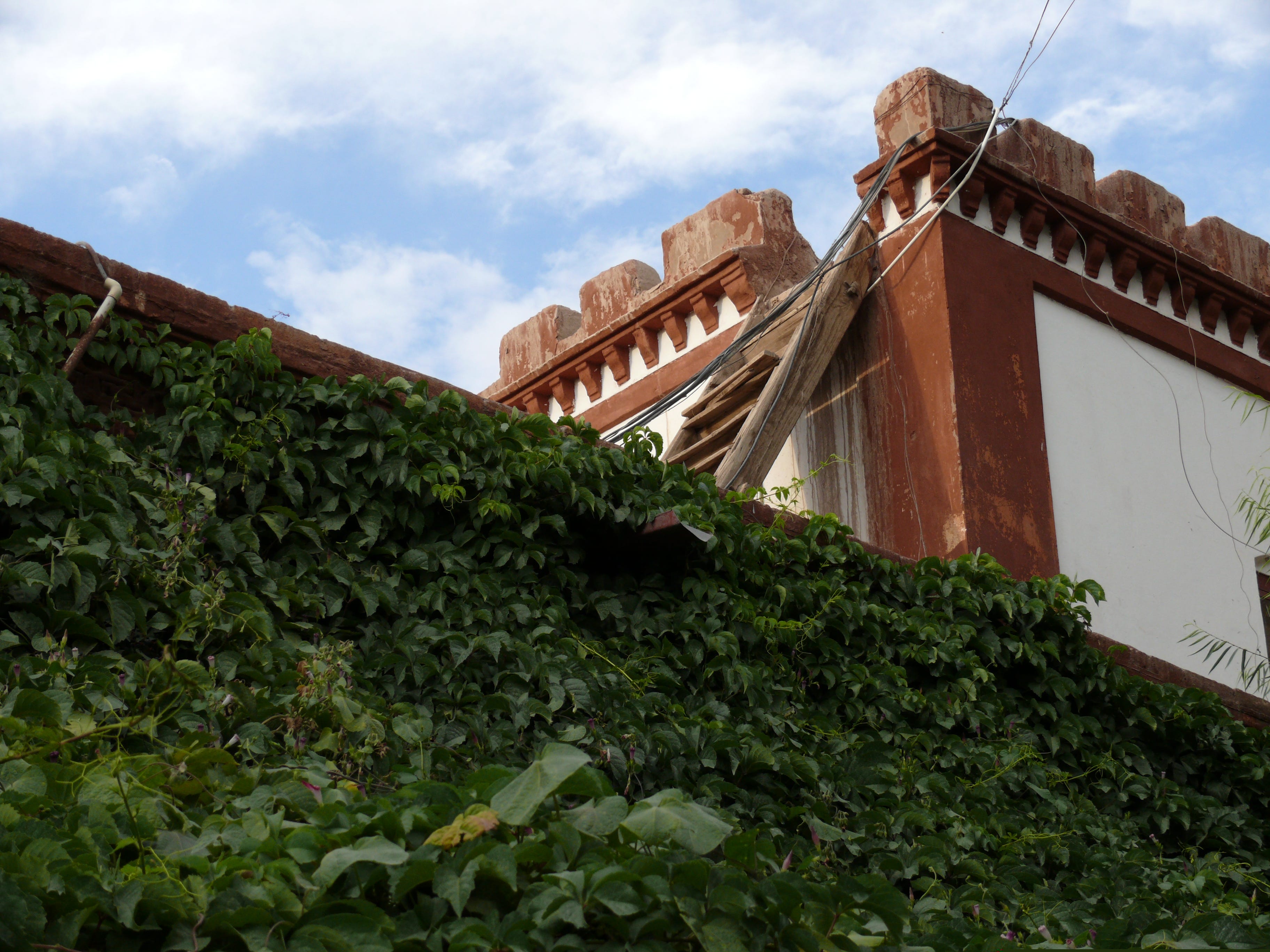
I talked with the owners of the restaurant and asked if I could bring friends back to have a cocktail on the patio of the second floor, a second bribe was paid and the path forward cleared. I was guiding a group of travelers and thought it might be the best place to talk about the Great Game, sitting on the patio of the old British Embassy in Kashgar, looking over the market and with the mountains and the sands on the horizon.
When we came back that evening it was glorious, and as we told the story of spies and espionage, of artifacts being stolen and hoarded from plunder, we looked to the horizon and saw a wall of blackness and wind. The speed of the sandstorm impressed me and instilled fear, and inside Chini-bagh we all fled as the antique windows rattled and the sands blasted the outer walls. Sandstorms here can toss a transfer truck like paper. And by candle light flickering in the dusty haze seeping in through the pane and cracks, we finished our cocktails and the stories of old hiding in the bedroom of the old British Embassy.
Thank you for this wonderful tale ❤️