

Rock Eagle Mound
On place, distortion, and memory.

Once a year my brother and two cousins and I travel to the piedmont of the state of Georgia, the foothills of the Appalachian mountains. It is always spring and the goal is a three day supported bike race through our old home town and the region surrounding it. We didn’t seek out a return to our childhood, it was the bike event that brought us there, and the convenience of the race, but there is something interesting in returning to a landscape that shapes you in your youth, especially when most travel is to the new, the idea of a return as an accident creates a certain mixture of nostalgia and discomfort; a strange feeling being in a place that lives mostly in one’s memory clashing with its present newness and reality. The below came from biking past a place steeped in memory for me, and things surfaced that had been dormant in my mind for decades, a stirring that awoke curiosity, and I started to look and dig into a story I once told, to find out if it was real again. The below, as far as I know, was real:
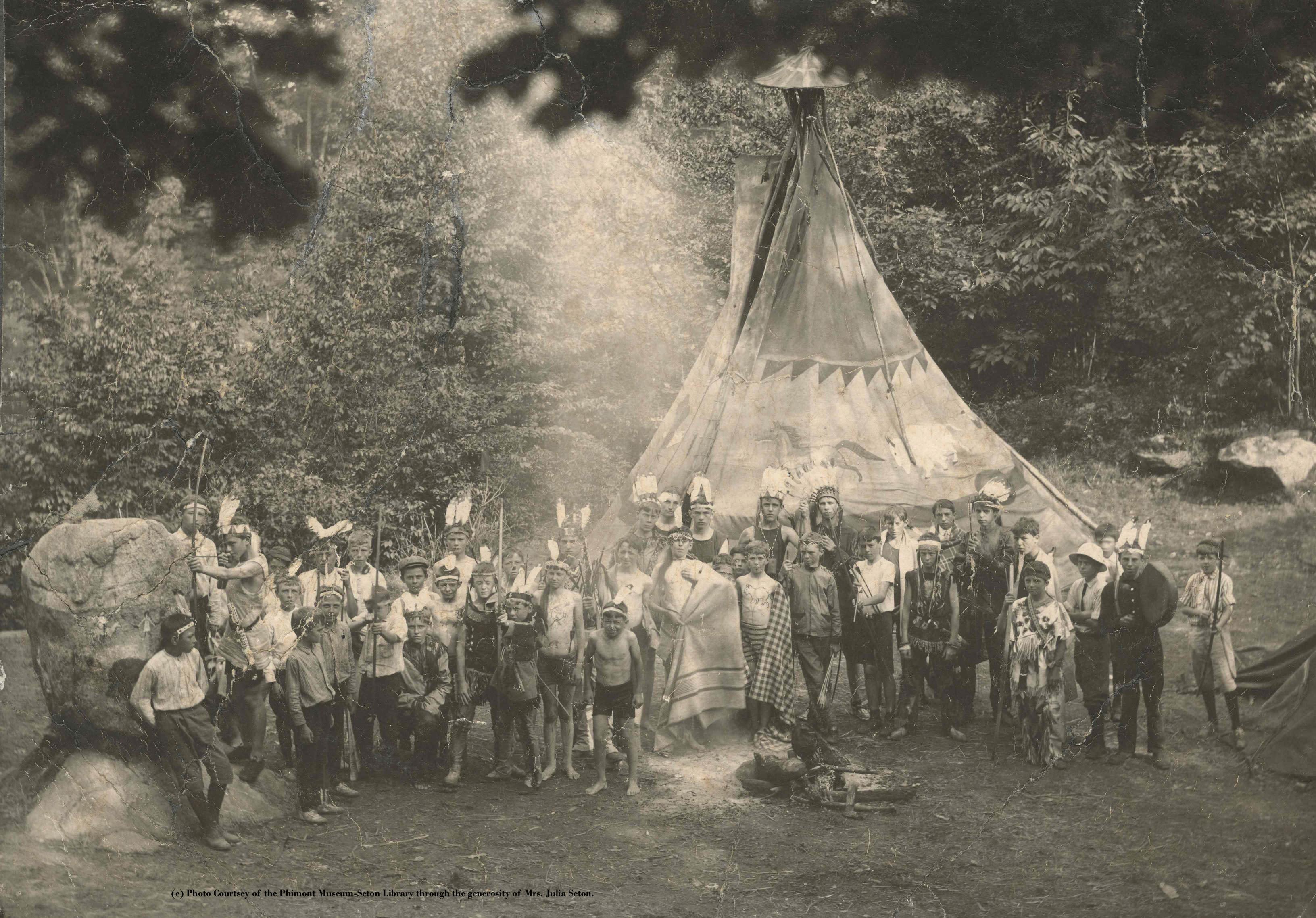
There were three tribes that we all were divided and folded into; Shawnee, Cherokee, and Muskogee, and in some grossly obscure way the appropriation of costume and language was ignored in the name of childcare and education all in the service of summer camp. I was an outdoor education specialist, and my job, at certain times of the week, was to put on a white and grey headdress made of synthetic feathers and twine, a loin and breech cloth out of burlap and hemp, and head out into the woods to roleplay as the “Great Spirit”. It seemed not to occur to the adults around me that this was absurd, that to cartoon and cosplay a culture that was brutally destroyed in the name of manifest destiny was grotesque, but this was also a land steeped in a history of slavery and there were more recent crimes swirling in the air leaving little room for the older sins.
The camp was in the central part of the state of Georgia and was based around an archeological effigy called Rock Eagle. The main camp was a large facility that held conferences throughout the year, complete with a dining hall, cabins, and auditorium. The archeological site was about 2 miles from the main camp in the woods. Alice Walker, the author of The Color Purple had grown up near by and had worked at the dining hall of the main camp in years past. In interviews she talks about her connection with the archeological site: “I had a job at the 4-H club, the white 4- H club as a salad girl (at the Rock Eagle center), and we would drive there and work. And I remember feeling the injustice of how we did all the work there on this place that was actually… had been taken over from Native Americans. Our whole town, all of Georgia was heavily Native American, and the colonizers had wiped them out. But where I lived, there was a huge eagle, it’s called Rock Eagle, and it’s a mound that you can only tell is an eagle if you climb up a tower and look down and you can see this beautiful eagle, so we always felt connected to that.”
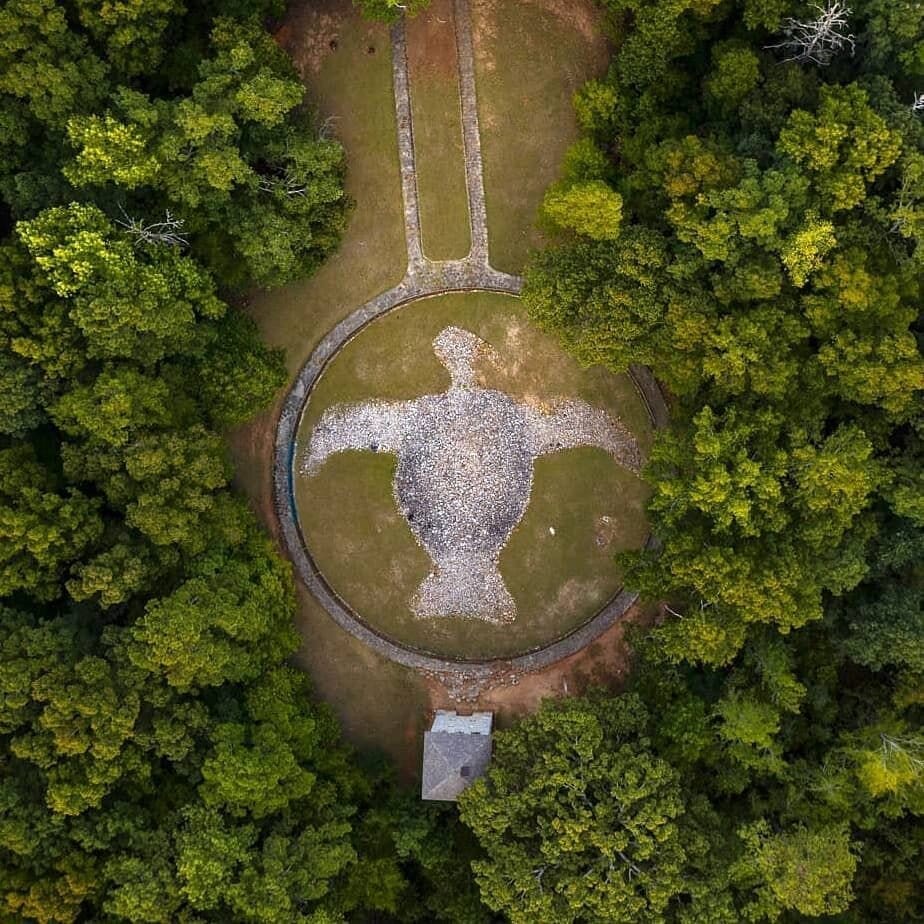
Once or twice a week I was instructed to drive to the effigy, a mound 8 feet tall composed of bowling ball sized quartzite laid in the shape of a large bird (102 ft long from head to tail, and 120 ft wide from wing tip to wing tip). The site was surrounded by a chain link fence 10 feet high, and, at the tail of the bird, there is a three story high granite structure built in 1936 by the Works Progress Administration (WPA) to provide an elevated view of the mound. I was given a key to the padlock which would open the fence, and was told to enter the site, climb the mound, and make a spot to lay down on the belly of the bird. In this way I was unseen by observers walking up to the ground level, although would be seen from anyone in the tower. In the humid and hot Georgia summers I would climb up the effigy, make a nest in the quartzite, and fall asleep to wait.
Cabins of campers would then walk from camp on a nature hike, the goal being the bird, and would eventually saunter up to the fence from the woods. The campers were then asked to yell out “How! Oh Great Spirit!” at which point I would jump up from my hidden spot and deliver a speech in character on the mythos of the mound and the landscape. This was the summer of 1997.
